




Central Heating and Air Systems Sized for Your Eugene or Salem Home
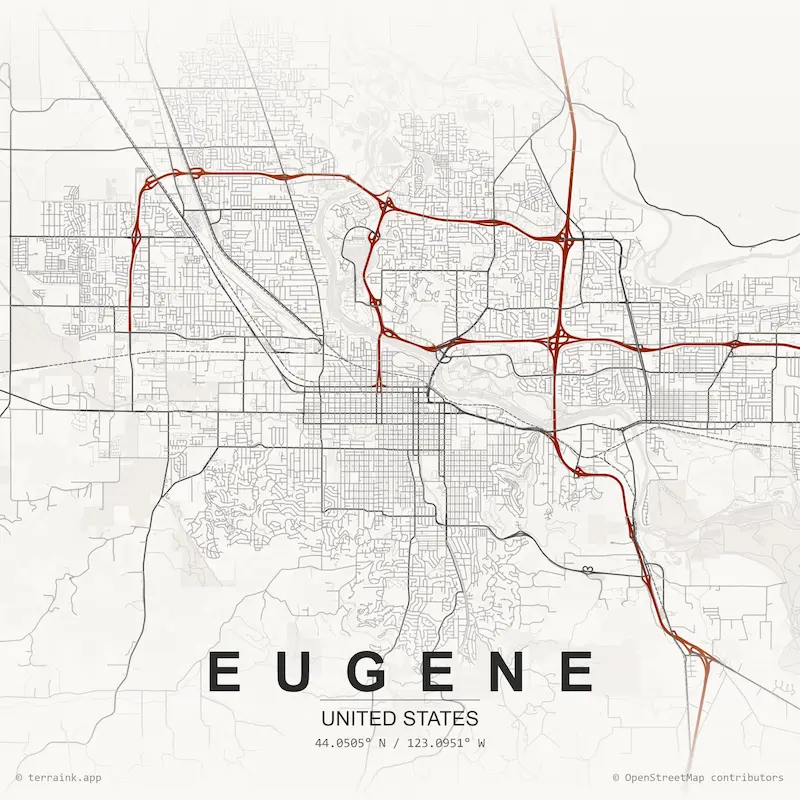
James Heating & Air Conditioning installs central heating and air systems in Eugene, Springfield, Salem and Keizer homes, whether that means a furnace with AC, a heat pump or dual fuel. We size each one to your house with a room-by-room load calculation, and we pull the permit.
Central heating and air services we provide
Our technicians check your fuel, ducts and panel first, and our crews install anything from a cooling-only swap on a sound furnace to a full furnace-and-AC replacement.
Furnace and central air
A gas or electric furnace inside, a cooling coil on top of it and a condenser outdoors. It's the pairing most Willamette Valley houses already have, and when your furnace is still sound, we replace just the cooling side.
Heat pump with an air handler
One outdoor unit cools your house in summer and runs in reverse to heat it in winter. The air handler indoors holds the blower and the backup heat coils. It's the usual upgrade for a house heated by an electric furnace.
Dual fuel
A heat pump paired with a gas furnace. The heat pump carries the heating for most of the year, and the furnace takes over below a switchover temperature we set with you, commonly somewhere between 30 and 35°F.
Whole-system replacement
When the furnace and the AC are both near the end, we replace them as a matched pair. We check your ducts and electrical panel first, since new equipment on tired ductwork still runs loud and uneven.
Duct cleaning and airflow checks
A new system only performs as well as the ducts feeding it. We clean air ducts and check airflow at the registers, and our duct cleaning crews handle homes where years of dust have built up.
Repairs and tune-ups after the install
We repair and maintain the furnaces, heat pumps and central air systems we install, along with the ones already in your house. A yearly tune-up catches a weak backup coil or a clogged drain before the weather turns.
How a central heating and air system works
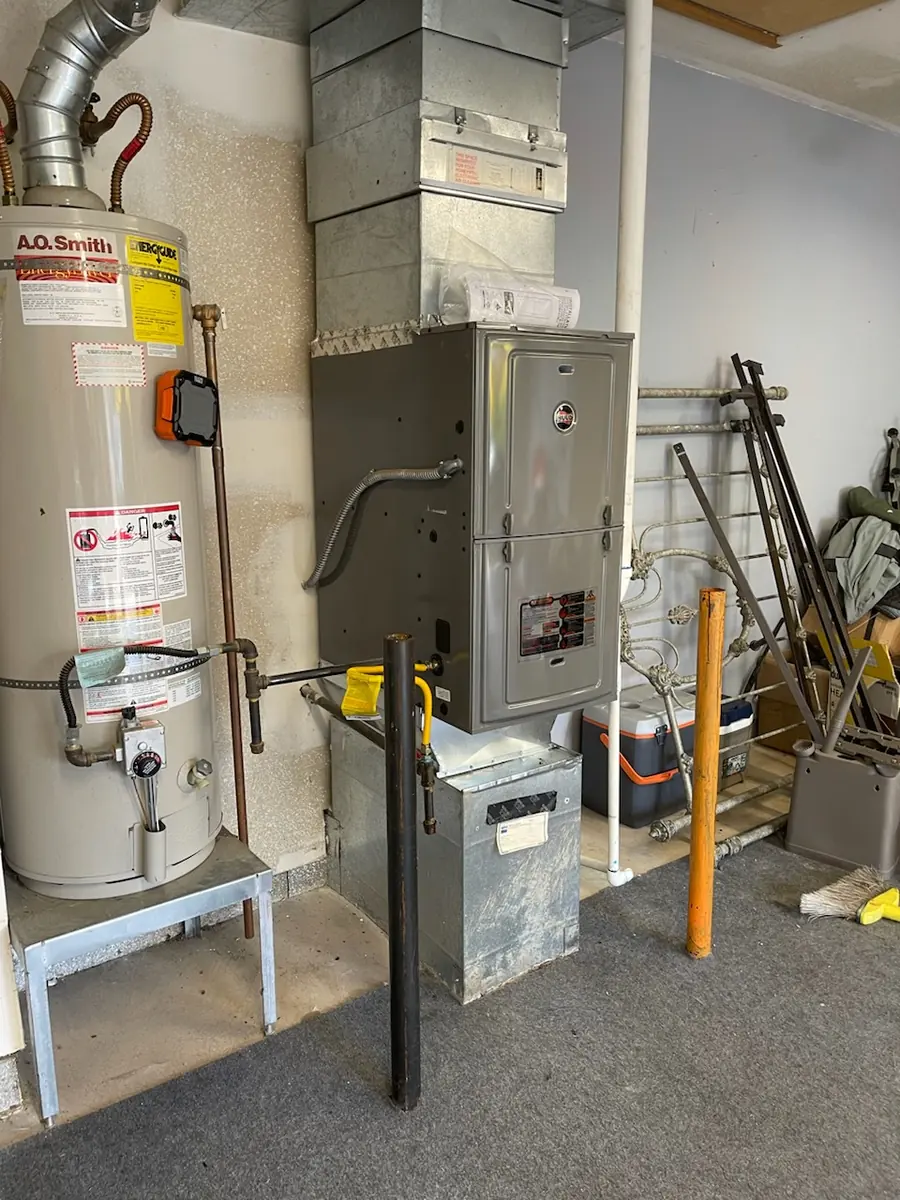
Central systems heat or cool the air in one place, then a blower pushes it through supply ducts to every room while return vents pull it back for another pass. In winter, a furnace makes the heat or a heat pump draws it from the outdoor air.
- Outdoor unit. An air conditioner (the condenser) or a heat pump.
- Indoor unit. A furnace, or an air handler if you have a heat pump. It holds the blower.
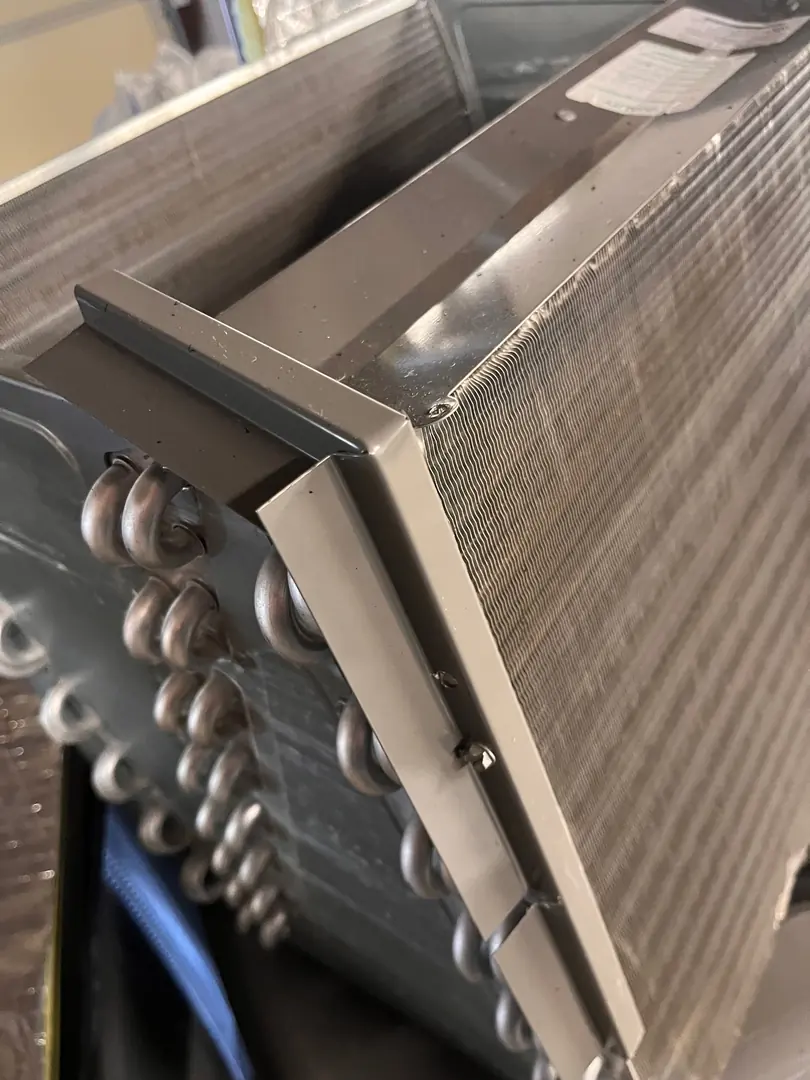
- Indoor coil. Refrigerant inside it cools the air.
- Ducts and thermostat. The channels that move air, plus the wall control.
Not sure what you have? A vent pipe through the roof or wall means a gas furnace. Photograph both labels, and our office will read them with you over the phone.
Signs we look for before recommending a new system
Most central systems give months of warning before they fail, and these six usually mean it's time to plan a replacement instead of booking another repair. If you smell gas, leave the house first, then call 911 and NW Natural at 800-882-3377 from outside.
Rooms that never match the thermostat
An upstairs that stays warmer than the rest of the house points to sizing or ductwork, not a failed part. A new system sized the old way won't fix it, so we measure before we recommend anything.
A repair every season
When the same system needs a part each winter and again each summer, that repair money is better spent toward a replacement. We go through the repair history with you on the visit.
Backup heat that won't switch off
If your heat pump's "aux heat" light stays on through mild weather, the heat pump isn't carrying the load. Electric backup coils are doing the work instead, and your power bill shows it.
Short cycling
A system that starts and stops every few minutes is often oversized. All those restarts wear it out faster and leave the air in your house feeling clammy rather than comfortable.
An older AC or heat pump on R-22
R-22 refrigerant is no longer produced in the US. A leak on an older system that runs on it gets expensive to fix, and a recharge only buys you time.
Rust, soot or cracks on a gas furnace
That's a safety problem, not a comfort one, so book a visit this week. If a carbon monoxide alarm sounds, get everyone outside and call 911 before anything else.
How we compare furnace, heat pump and dual fuel systems
All three setups cool your house the same way, with an outdoor unit and an indoor coil. Where they part ways is how they make heat, which fuel they burn and which rebates they can earn.
| Setup | How it heats | Fuel | Fits best when |
|---|---|---|---|
| Furnace + central AC | Burns gas, or heats with electric coils | Gas or electric for heat, electric for cooling | Your furnace has years left, or you only want to add cooling |
| Heat pump + air handler | Moves heat in from the outdoor air, with electric backup coils | Electric only | You heat with an electric furnace, or you have no gas line |
| Dual fuel | Heat pump most of the year, gas furnace on the coldest days | Electric and gas | You have gas and want a heat pump doing most of the work |
A house with no ductwork at all calls for something different. Ductless heat pumps heat and cool room by room without a single duct.
What we weigh before we recommend a system
Mild, wet valley winters suit heat pumps, but your house has the final say. Five facts narrow it to one or two setups.
- Gas service. No gas line at the house points toward a heat pump.
- Your furnace's condition. A sound furnace is a good reason to keep it and add cooling. A worn-out one costs more to keep alive, and the repair-or-replace decision turns on its age, its safety and the size of the repair.
- What heats the house now. Moving off an electric furnace makes the strongest case for a heat pump, and it's the switch Energy Trust of Oregon's ducted heat pump incentive is built around.
- Duct condition. Older crawlspace and attic ducts were often sized for a smaller furnace, and many leak.
- Whether you want cooling. A heat pump gives you air conditioning and efficient heat from one outdoor unit.


Efficiency ratings we quote and the federal minimums
Three ratings appear on central equipment, and a higher number means less energy for the same comfort. We quote the rating for each model, so you can compare offers line by line.
- SEER2 measures how efficiently an AC or heat pump cools. Oregon sits in the federal North region, where a split air conditioner needs at least 13.4 SEER2 and a split heat pump 14.3 SEER2.
- HSPF2 measures how efficiently a heat pump heats. Split heat pumps need 7.5 HSPF2, and single-package heat pumps need 13.4 SEER2 and 6.7 HSPF2.
- AFUE is the share of a furnace's gas that becomes heat for your house. The federal floor is 80%, ENERGY STAR requires 97% in the North region, and a 95% furnace loses about 5% of its gas up the vent.
New split systems also run on R-454B or R-32 refrigerant, and our air conditioning installation quotes name which one you're getting.
How we add central air to a house that only has heat
Plenty of valley houses were built with a furnace and no cooling. If yours already has ducts, adding air conditioning is a smaller job than most people expect, because the furnace blower and ductwork stay. We install an outdoor unit, a coil on top of the furnace, a refrigerant line set between the two and a dedicated electrical circuit.
Pick a heat pump for that outdoor unit and it heats your house as well, keeping the furnace for the coldest mornings. Cooling moves more air than heating does, so we check the duct sizes and the furnace blower before we quote.

Packaged units, zoning, humidity and smoke filtration
Most central systems are split systems, with one unit outdoors and one inside. These four add-ons and variations solve problems a standard split can't, and each one works with the ducts you have.
- Packaged units. One outdoor cabinet, on a pad or a roof, holds the whole system and connects to your ducts. It suits a house with no indoor room for equipment.
- Zoning. Motorized dampers in the ducts and a second thermostat let an upstairs bedroom wing run on its own schedule.
- Humidity control. A whole-home humidifier or dehumidifier ties into the ducts and the thermostat, which helps with dry winter air or a damp crawlspace.
- Smoke filtration. When wildfire smoke settles over the valley, a higher-rated filter in the same ducts cleans the air your system recirculates, part of the filtration for wildfire smoke we set up.
Our technicians check the ductwork before recommending any of them.
How our installation process works
A central install moves through five stages, from your first call to the inspection that closes the job.
- Call the office nearest you. Tell us what's in the house now, and we'll book a home visit.
- We inspect the whole house. That covers the furnace or air handler, the outdoor unit, ducts, panel and fuel, plus the rooms that run hot or cold.
- You get a written quote. We size the system from a Manual J load calculation, not the label on your old unit.
- We pull the permit and install. Our EPA 608 certified technicians handle all the refrigerant work.
- The inspector signs off. That closes the job, and we stay on for your tune-ups and repairs.

We match your system to the rebate your utility offers
In Oregon, the main heat pump rebates run through your electric utility, so the name on your power bill decides the program. EWEB and Springfield Utility Board run their own, and SUB lists us as an HVAC contractor. Energy Trust of Oregon serves PGE and Pacific Power customers. Salem Electric runs its own program for parts of Salem and Keizer, and so do Lane Electric Cooperative and Emerald PUD in Lane County.
One rule changes the equipment choice. Energy Trust's ducted heat pump incentives don't allow a gas backup, so a dual fuel system can't earn them. The federal 25C tax credit also ended for equipment installed after December 31, 2025. Amounts change during the year, so James Heating checks the current Oregon HVAC rebates by utility against your bill before you choose.
Why homeowners choose us for heating and air
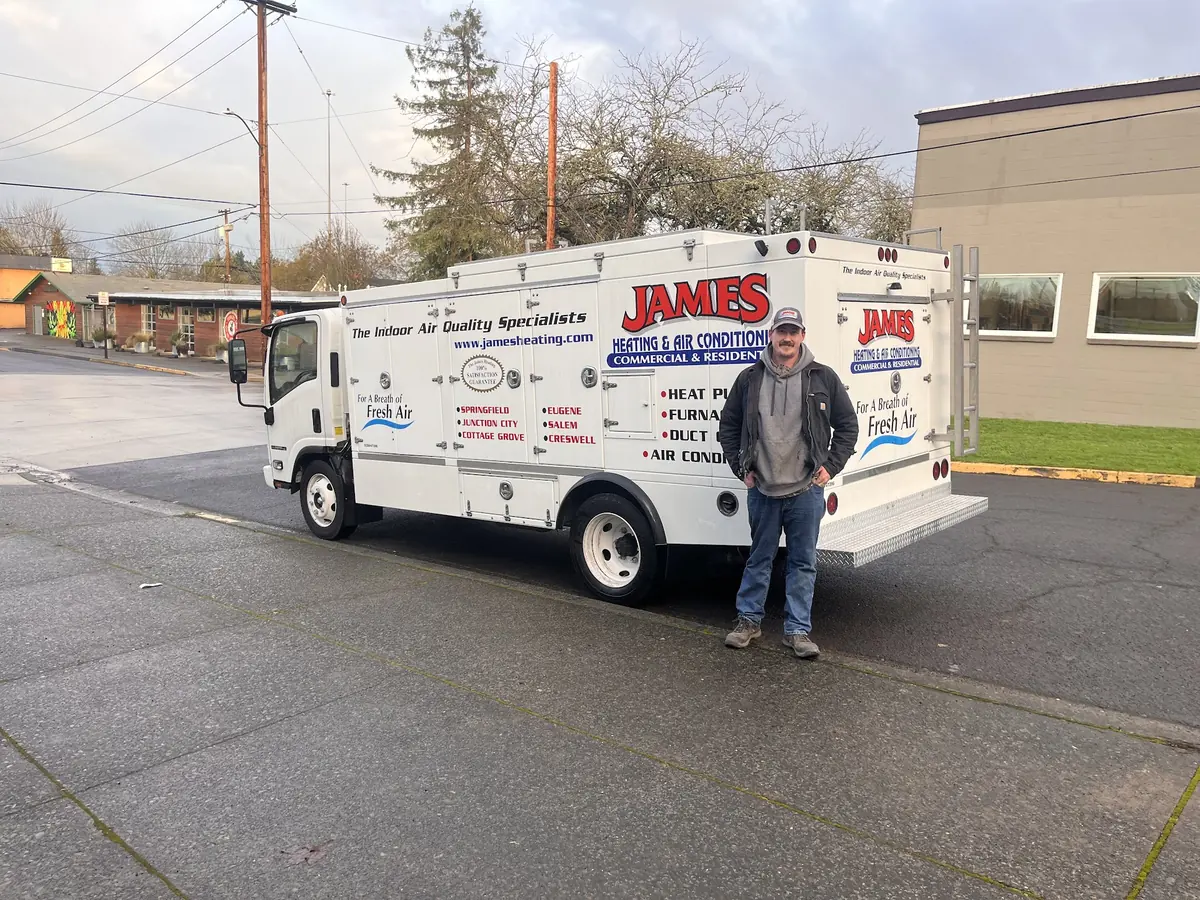
James Heating has installed and serviced heating and air since 1983, and it's still family-owned, with offices in Eugene and Salem. The same people handle your install, the tune-ups and any repair after it.
- Licensed, bonded and insured under Oregon CCB #47396.
- Ruud Authorized Dealer at both offices, and Rheem Authorized Dealer in Salem.
- Emergency calls, day or night. We answer both numbers 24/7.
- A price before the work. We quote after explaining what we found, and nothing starts until you agree.
- Straight advice. If your gas furnace is only a few years old, we'll say so before anyone sells you a heat pump.
- Rebates checked early. We check your utility's program against the system type before you choose.
Central heating and air questions
What is central heating and air?
Central heating and air is one system that heats and cools the whole house through a single set of ducts. The three common setups are a furnace with central AC, a heat pump with an air handler, and dual fuel, which pairs a heat pump with a gas furnace.
What does a new central heating and air system cost?
We quote after the home visit, because the price turns on the house more than the equipment. System type and size, the state of your ducts, any electrical panel upgrade, the permit and the rebate you qualify for all move the number, the same factors behind any HVAC installation price.
Is a heat pump the same as central air?
Close. A ducted heat pump is central air that also heats, using the same outdoor unit and the same ducts. A plain central AC only cools, so it needs a furnace beside it for winter.
What's the difference between a furnace and an air handler?
The furnace makes heat by burning gas or with electric coils, which is how a furnace works at its simplest. An air handler holds the fan and coil for a heat pump and only makes heat with its backup coils. A gas furnace has a vent pipe running outside, and an air handler doesn't.
Do heat pumps work through a Eugene or Salem winter?
Yes, for nearly all of it. Valley lows seldom stay far below freezing for long, and modern heat pumps keep heating past that point. On the coldest nights, the backup coils or a dual fuel furnace take over.
Does Oregon's new heat pump rule mean I have to switch?
No. The rule took effect October 1, 2026, with a six-month phase-in for builders, and it covers newly built homes that install split-system air conditioning. Replacing the furnace or AC in an existing house isn't affected.
Our central heating and air service areas
Two offices cover the southern and central Willamette Valley. Call the one closest to your home.
What our customers say
"Your crew did a great job installing our air conditioner & I felt very comfortable with their knowledge and expertise. I can tell service is very important to your company because of that I will recommend James Heating every chance I get."
M. Morgan
"Your salesman, installers, technicians, and office ladies were all professional, courteous and helpful. We have nothing but admiration for your company and will recommend you to everyone."
The Farsson Family
Gallery
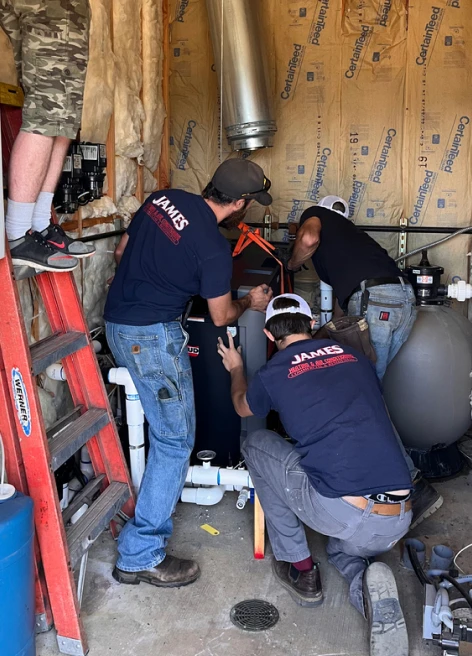
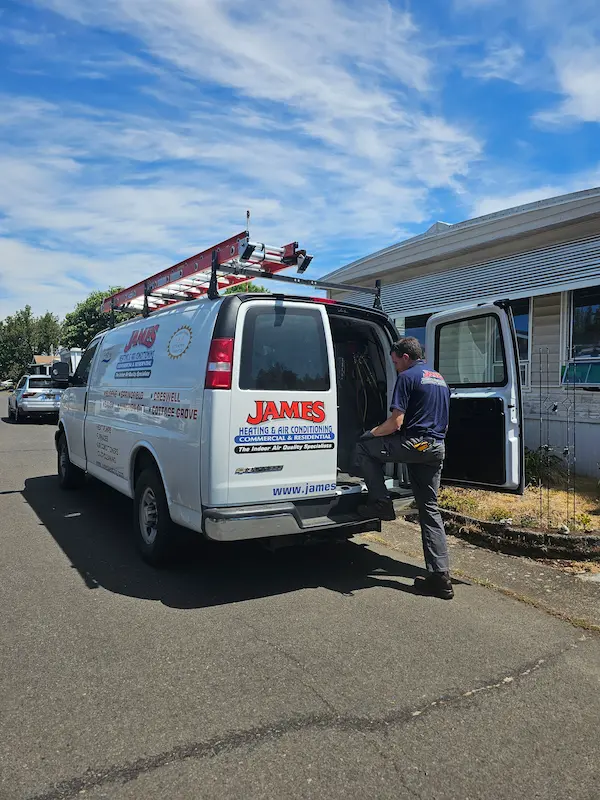
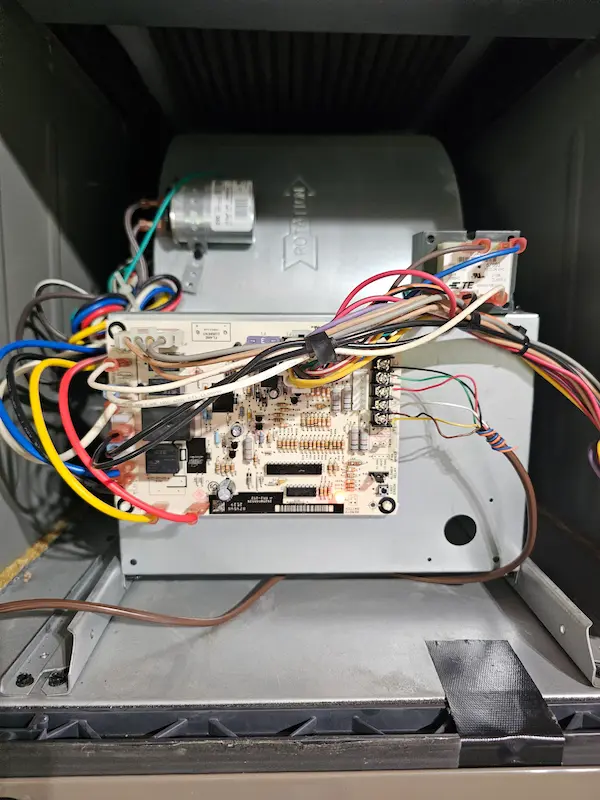
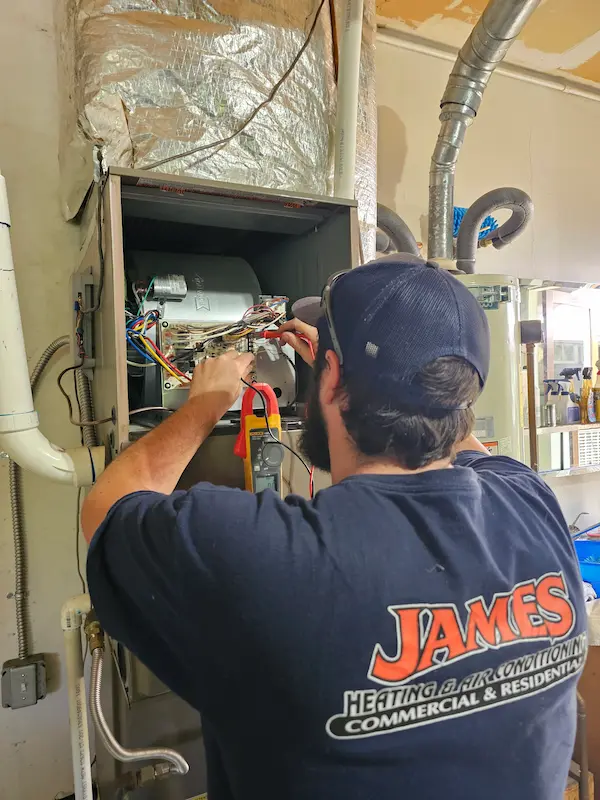
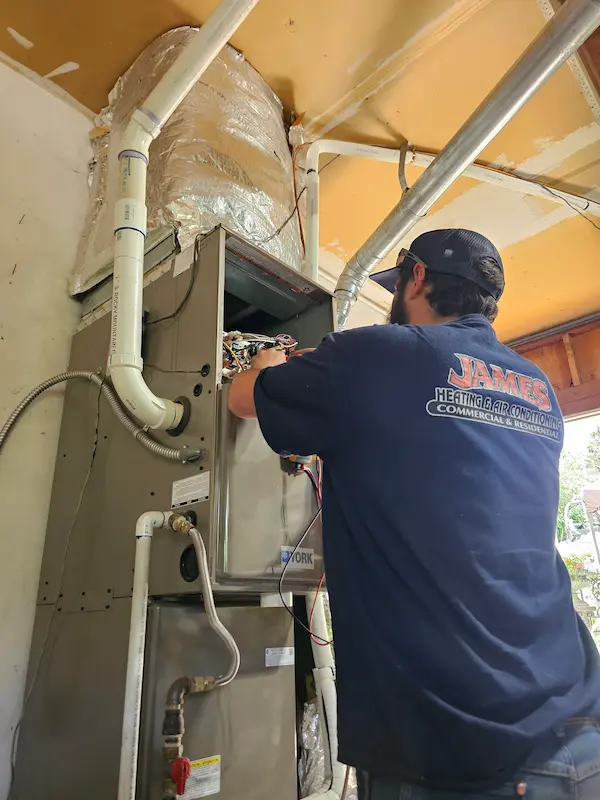
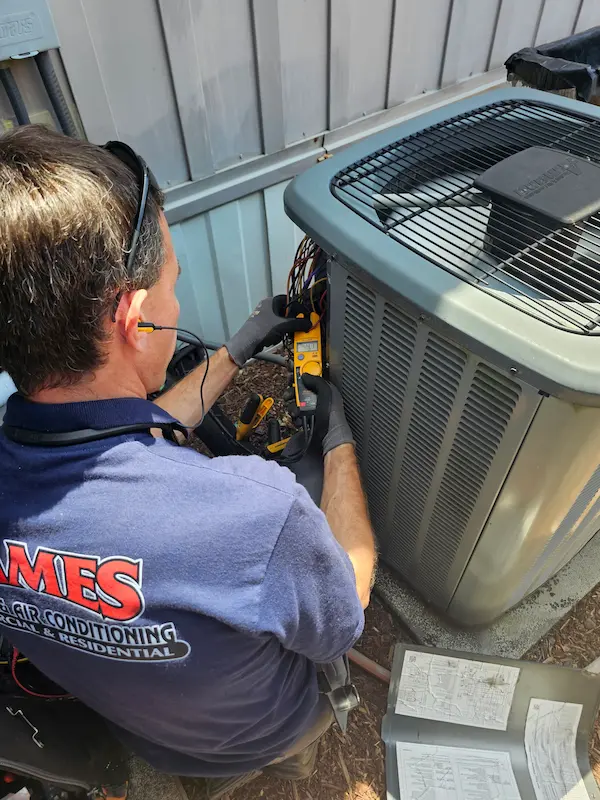
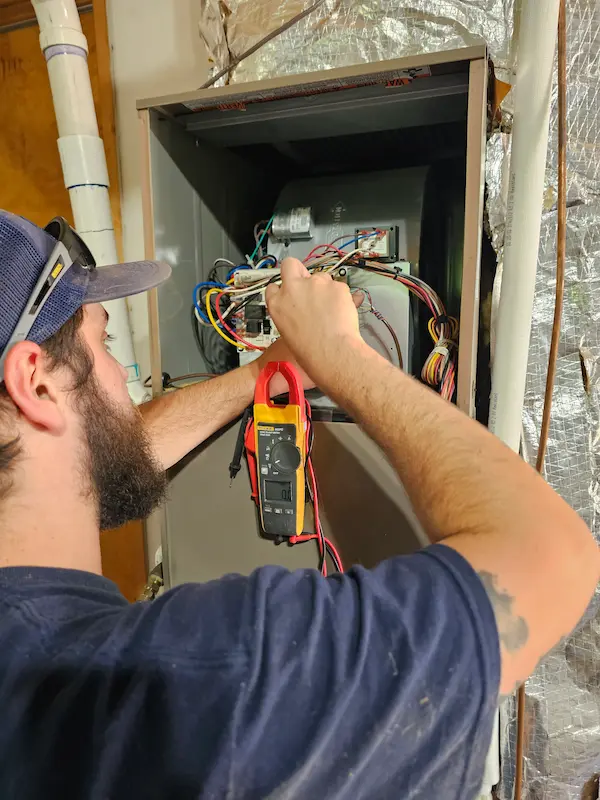
See James Heating and Air Conditioning at work. Explore our gallery of residential and commercial HVAC installations and repair services.

Book a central heating and air recommendation
Tell us what heats and cools your house now. We'll come out, run the numbers on your rooms and recommend the setups that fit, with a written quote. Call Eugene at (541) 461-2101 or Salem at (503) 581-9982, or send us a message.
Call Eugene at (541) 461-2101 or Salem at (503) 581-9982.
Oregon CCB #47396 · Family-owned since 1983 · Ruud Authorized Dealer (Eugene and Salem) · Rheem Authorized Dealer (Salem)